Updated November 2026
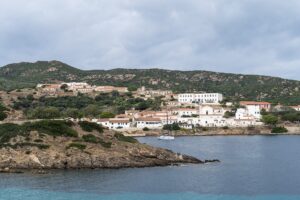
All you need for snorkelling in Stintino is a mask, snorkel and fins, but picking the right spot for the day’s wind makes all the difference. Stintino has two seas: the “inner sea” of the Gulf of Asinara, shallow and sheltered, and the “outer sea”, with cliffs and coves facing west. Then there’s Asinara, with the coves of its Marine Protected Area, which you can only reach by boat.
Every day aboard the fishing boat Alex we stop to swim in these waters. In this guide we tell you where to snorkel from the shore and from the sea, what you’ll see underwater, how to read the wind and which rules to follow.
At a glance
- From the shore: the Pelosa tower islet and the rocks of the Pelosetta, plus the outer-sea coves between Capo Falcone and Cala del Vapore.
- From the sea: Asinara’s coves, such as Cala del Granito, Cala degli Inglesi and Porto del Bianco, reachable only with licensed operators or your own boat.
- The wind decides: with the mistral, stick to the inner sea; with easterly winds the outer sea is calm and crystal clear.
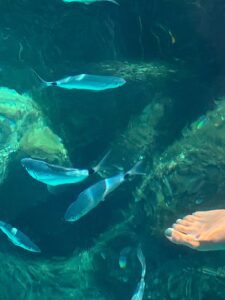
- What you’ll see: sea bream, salema, damselfish, rainbow wrasse, octopus among the rocks and Posidonia meadows.
- Rules: don’t touch, don’t collect, don’t feed the fish. In season, La Pelosa can only be visited with a booking.

Why Stintino is a special place for snorkelling
The main reason is the water: on many days visibility is excellent, especially over pale sand or granite rock. The second is protection. Around Asinara lies the “Isola dell’Asinara” Marine Protected Area, created in 2002, and the marine life shows it: the Park reports abundant octopus, moray and conger eels, and in the deeper rocky areas you might even meet a dusky grouper.
The third reason is variety. Within a few kilometres you go from shallow, sandy water, perfect for beginners, to rocks full of crevices where fish and crustaceans hide. And between sand and rock lie meadows of Posidonia oceanica, the Mediterranean seagrass that provides home and nursery for countless species.
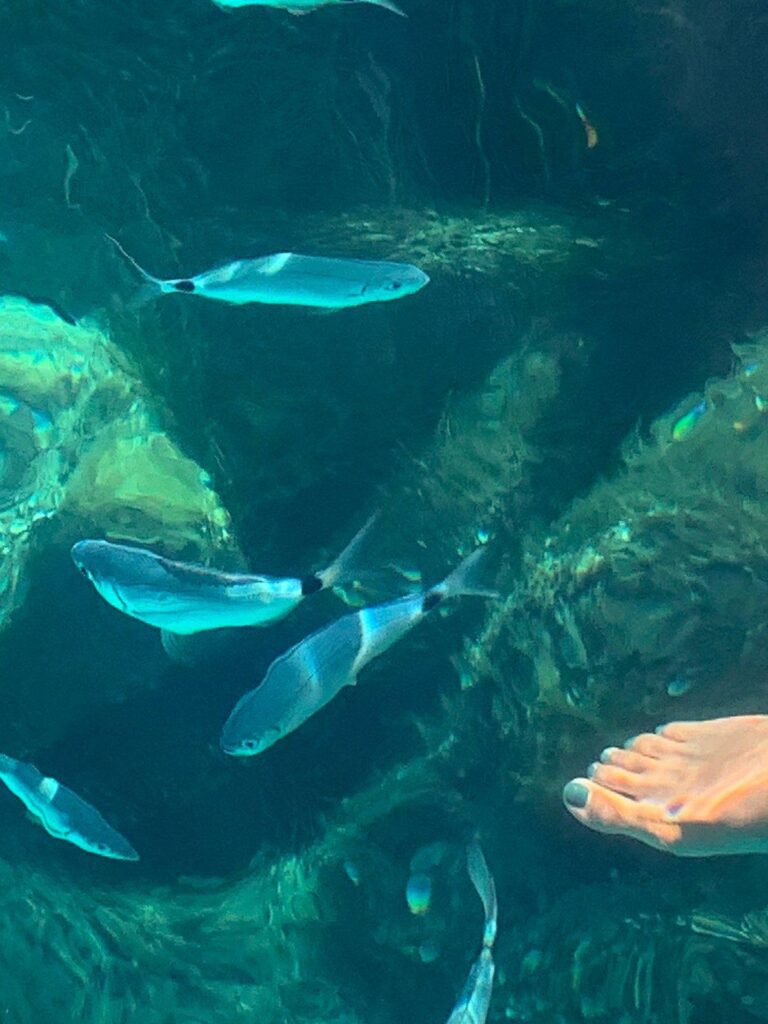
First things first: check the wind
We say this from experience, because it’s the first thing we check every morning before leaving Porto Mannu. In rough water snorkelling gets tiring, visibility drops and it can be dangerous near the rocks.
| Wind | Where to go | Where to avoid |
|---|---|---|
| Mistral (north-west) | Inner sea: La Pelosa, Pelosetta, Le Saline | The outer-sea coves, which face straight into it |
| Easterly winds (levante, scirocco) | Outer sea: the coves between Capo Falcone and Cala del Vapore | The inner sea can be choppy and less clear |
| Calm | Anywhere, and the best days for Asinara | No limits, just the usual safety checks |
To see what each beach is like and which to pick for the wind, read our guide to the beaches of Stintino.
Where to snorkel in Stintino from the shore
The Pelosa tower islet and the Pelosetta
La Pelosa is famous for its shallow turquoise water, but for snorkelling the most interesting spot is around the tower islet, where the sand gives way to rock. From the Pelosetta, the little cove next door, you can walk to the islet across a low, rocky passage: you’ll need water shoes and a bit of care, especially if the sea is choppy.
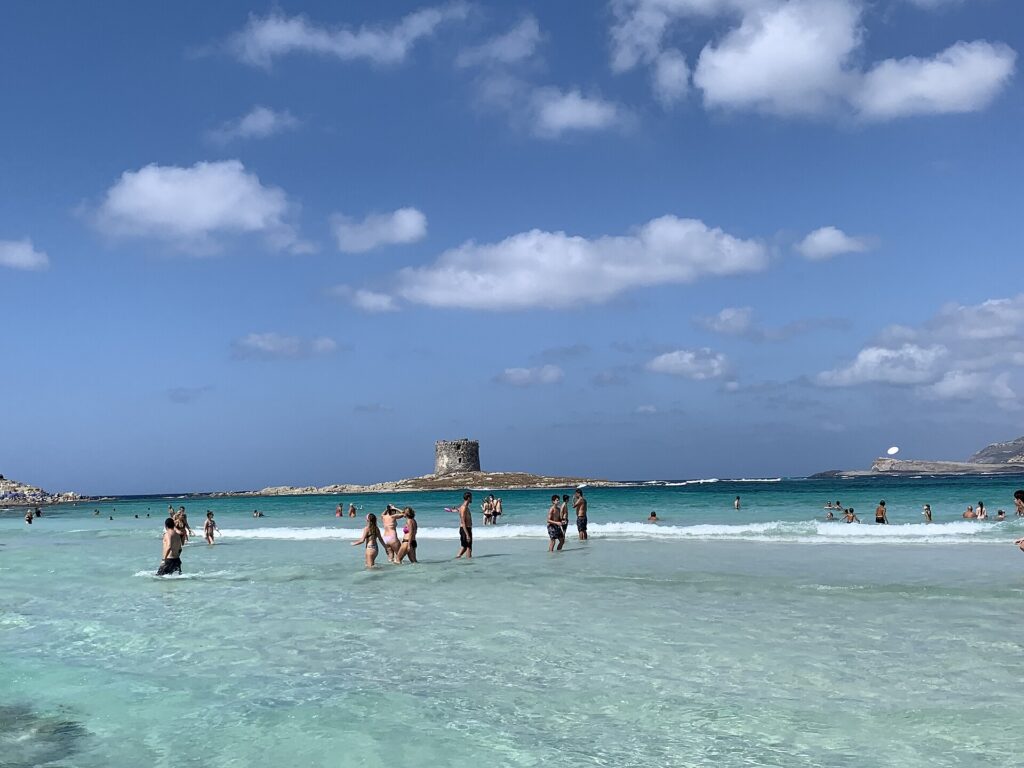
La Pelosa: remember to book
In the 2026 season access to La Pelosa was capped, with compulsory booking from 15 May to 15 October and a mat required under your towel. Bookings are only made on the official website indicated by the Municipality. Dates and rules can change every year, so check before you go.
The outer sea: from Capo Falcone to Cala del Vapore
On the western side of the peninsula the coast is high and jagged, with small sand and pebble coves at the end of short valleys, such as Valle della Luna, Coscia di Donna and Cala del Vapore. Here the rocky seabed drops away faster and is full of crevices: it’s the best area for those with a little experience.
But be careful: these coves are open to the mistral. Choose them only on calm days or with easterly winds, and note that some are reached by short but steep paths.
Le Saline: for starting out with children
Le Saline, south of the village, has a shallow sandy seabed. There’s less to see underwater than among the rocks, but it’s the ideal place to let children try a mask, calmly and without waves, and there’s plenty of space even in high season.
Snorkelling at Asinara: the coves of the Marine Protected Area
The finest waters are Asinara’s, but from Stintino you can only reach them by sea. On our fishing tourism days we stop in coves such as Cala del Granito, Cala degli Inglesi and Porto del Bianco, where the water is crystal clear and the seabed alternates sand, rock and Posidonia.

The Marine Protected Area has precise rules. Zone A is off-limits, while in Zone B swimming and snorkelling are allowed. If you come by your own boat you may only moor at the Park’s buoy fields; otherwise go with licensed operators, who know the coves and the places where stopping is allowed. All the ways to reach the island are in our guide on how to visit Asinara.
What you’ll see underwater
In the Gulf of Asinara you don’t need to go deep to see plenty of life. These are the easiest fish to recognise with a mask and snorkel:
- Sea bream: the two-banded sea bream has two black bands, one behind the head and one before the tail.
- Salema: silvery with golden stripes, in shoals; they graze on Posidonia leaves.
- Damselfish: small and dark, in clouds over the rocks; the young are electric blue.
- Rainbow wrasse: slender and very fast; males have an orange zigzag band along the side.
- Saddled sea bream: silvery, with a black spot edged in white before the tail.
- Octopus: hiding in dens among the rocks; look for empty shells piled at the entrance.
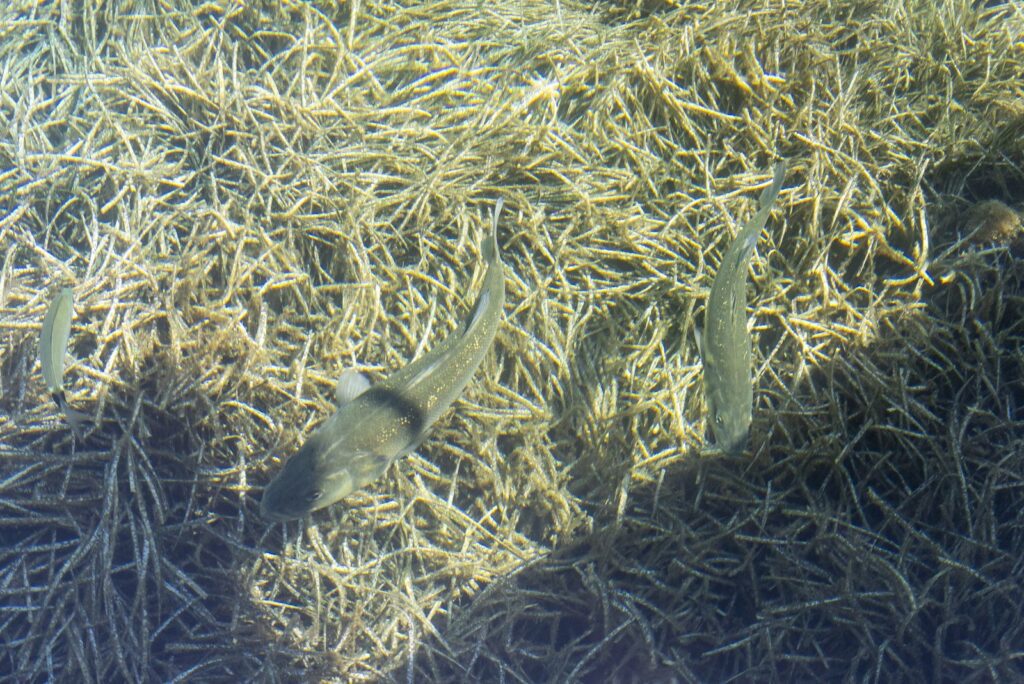
To get to know them better, we’ve written a full guide to the fish of the Gulf of Asinara, with the species we see every day and the protected ones.
Gear: what you really need
- Mask: the most important item. Test it by placing it on your face without the strap and breathing in through your nose: if it stays on, it fits.
- Snorkel: simple and comfortable in the mouth. Full-face masks are handy for beginners but not suitable for diving below the surface.
- Fins: short, soft fins are perfect for snorkelling and less tiring.
- Rash vest or shorty wetsuit: protects your back, which is always exposed to the sun in the water.
- Water shoes: essential for getting in and out over rocks.
- Surface marker buoy: recommended if you swim away from the shore. Boats don’t always see people swimming at the surface.
Rules and good practice
- Don’t touch fish, starfish, urchins or plants, and don’t stand on Posidonia or on rocks covered in life.
- Don’t take anything: shells, stones and sand stay where they are. Some species, such as the ribbed Mediterranean limpet and the noble pen shell, are protected.
- Don’t feed the fish: it changes their behaviour and upsets the balance of the ecosystem.
- Sunscreen: apply it at least half an hour before getting in, and rely on a rash vest where you can.
- Never alone: always snorkel with someone and stay close to the shore or the boat.
Snorkelling with children
For many children, the first time with a mask is unforgettable. Choose a spot with shallow, calm water, such as Le Saline or the sheltered part of La Pelosa, let them try the mask first where they can stand, and always stay beside them. A buoyancy vest or belt makes everything more relaxed, even for good swimmers.
Silvia’s tip
Swim slowly along the edge between the sand and the Posidonia, and every so often stop and float without moving. Salema and sea bream are curious: if you stay still, they’ll come to you.
Snorkelling on a fishing tourism day with us
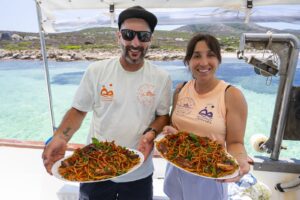
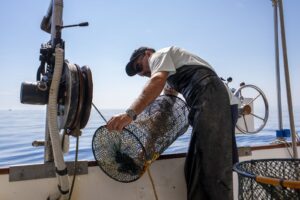
During a day aboard the fishing boat Alex we make several swimming stops in Asinara’s coves while lunch is cooked on board with the catch. Bring a mask, snorkel and fins if you have them; there are buoyancy aids on board for weaker swimmers. It’s an easy way to snorkel in the Park’s loveliest coves with the boat always close by.
If you’d rather go deeper with tanks, you’ll find the dive centres and best sites in our guide to diving in Stintino. The full programme of our day is on the fishing tourism experience in Stintino page.

Snorkelling in Stintino: FAQ
Where is the best snorkelling in Stintino?
From the shore, around the Pelosa tower islet and in the outer-sea coves between Capo Falcone and Cala del Vapore, on days without mistral. The finest waters are in Asinara’s coves, which you can only reach by boat.
Can you snorkel at Asinara?
Yes, in the areas where the Park allows it. Zone A of the Marine Protected Area is off-limits; for the coves it’s best to go with a licensed operator.
When is the best time?
The water is warmest from June to September. June and September are often the best months: clear sea and fewer people.
Is it suitable for children?
Yes, if you choose shallow, calm water and stay right beside them. A buoyancy aid helps a lot.
Do you need special equipment?
No: a mask, snorkel, fins and water shoes. A rash vest protects you from the sun.
Want to snorkel in Asinara’s coves? Come aboard the fishing boat Alex with Davide and Silvia: pot fishing, swims in the Park’s coves and lunch with the catch of the day → book your day.