Updated November 2026
Diving in Stintino mainly means diving in the “Isola dell’Asinara” Marine Protected Area: granite seabeds, Posidonia meadows, groupers, morays and spiny lobsters in waters protected since 2002. But you can’t just dive wherever you like. Inside the protected area, scuba dives are only run by diving centres authorised by the Park, at sites marked on the surface by a buoy.
Fishermen from Stintino, we experience these waters every day from the surface, hauling our pots. In this guide we explain how diving works at Asinara, what you’ll find underwater, how to choose a dive centre, when to go and what to do if you’re not certified yet.
At a glance
- The rules: in the Marine Protected Area, guided scuba dives are only run by centres authorised by the Park.
- The sites: the Park’s 2024 regulations listed 26 sites for diving and snorkelling, each marked by a red buoy with a diver-down flag.
- What you’ll see: Posidonia down to about 35 metres, granite walls, dusky groupers, morays, conger eels, octopus and spiny lobsters.
- When: the season runs from spring to autumn; the water is warmest from July to September.
- Not certified? Try a discovery dive with a dive centre, or go snorkelling.

Why dive in Stintino and Asinara
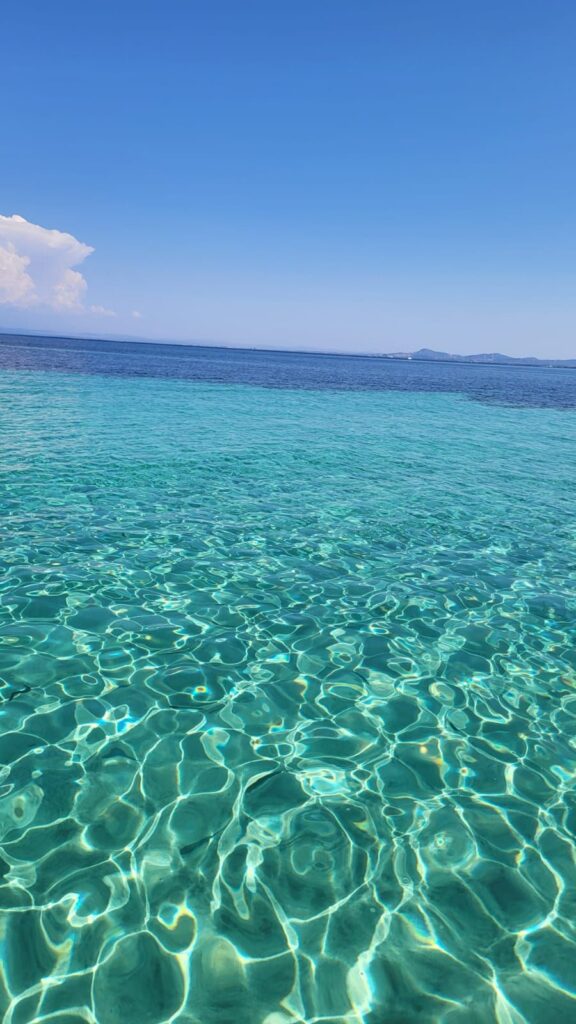
For more than a century Asinara was a prison island, closed to the public and to fishing. It has been a National Park since 1997, and since 2002 the island has been surrounded by a Marine Protected Area which, according to the Park, covers 10,732 hectares of sea and almost 80 kilometres of coastline. That long period of quiet shows underwater.
The Park reports abundant populations of moray and conger eels and octopus, and explains that dusky groupers here come into shallower water than in unprotected areas. Off the island’s eastern side lies a Posidonia oceanica meadow of about 15 km², reaching down to around 35 metres and considered one of the most important in the Mediterranean.
How diving works in the Marine Protected Area
This is the first thing to know, because it changes how you plan. In the Asinara Marine Protected Area, scuba dives take the form of guided underwater visits, led by guides or instructors from dive centres authorised by the Park, who take divers to the sites on their own boats.
What the Park’s regulations say (2024)
- There were 26 sites for guided dives and snorkelling, plus a few sites reserved for snorkelling only.
- Each site is marked on the surface by a red buoy topped with a diver-down flag.
- The number of dives per site per day is capped, as are the number of authorised dive centres and their boats.
- Zone A of the marine protected area is off-limits.
The regulations are updated every year, so check the current rules on the Asinara National Park website before you go.
In practice: if you’re certified, there’s no need to organise things yourself. Choose an authorised dive centre, book, and they’ll take you to the right sites for your level and the day’s conditions. You can check who’s authorised on the Park’s licensed operators page.
What you’ll find underwater
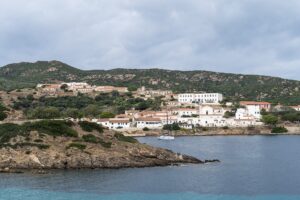
Almost all Asinara’s sites are linked to the island’s headlands and rocky shores, many with names local fishermen know well, such as Punta Sabina, Punta dello Scorno or Cala d’Oliva. Each site has its own character, but some environments come up again and again.
Granite walls and boulders
Much of the island is granite and schist. Underwater that means boulders, cracks, small caves and crevices: ideal shelter for moray eels, conger eels, octopus and scorpionfish, and for the most eagerly awaited encounters, the dusky groupers.
Posidonia meadows
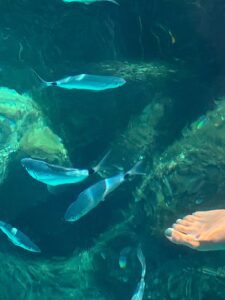
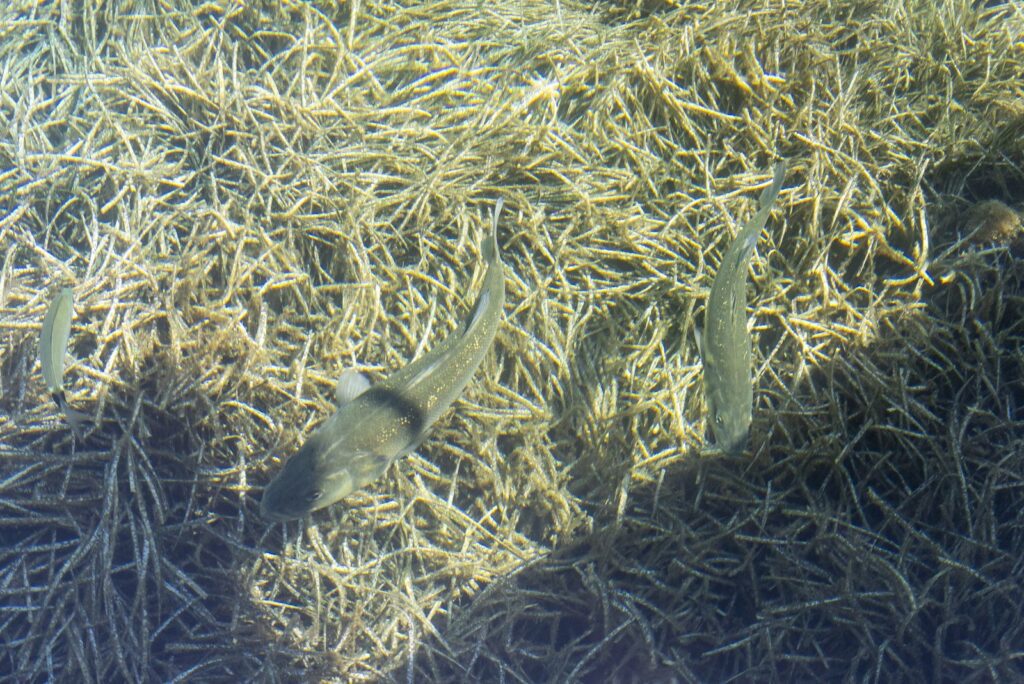
Between sand and rock lie the Posidonia meadows, swaying with the current. Salema, sea bream and wrasse swim here, and with a sharp eye you’ll spot seahorses and pipefish. Red starfish live along the edges of the meadow too.
Species to look out for
- Dusky grouper (Epinephelus marginatus): easier to meet in the protected area, even at moderate depths.
- Spiny lobster (Palinurus elephas): according to the Park, adults live between 15 and 100 metres, in rocky crevices.
- Moray eel (Muraena helena): pokes its head out of its den, mouth opening and closing as it breathes.
- Octopus: look for dens among the rocks, often surrounded by empty shells.
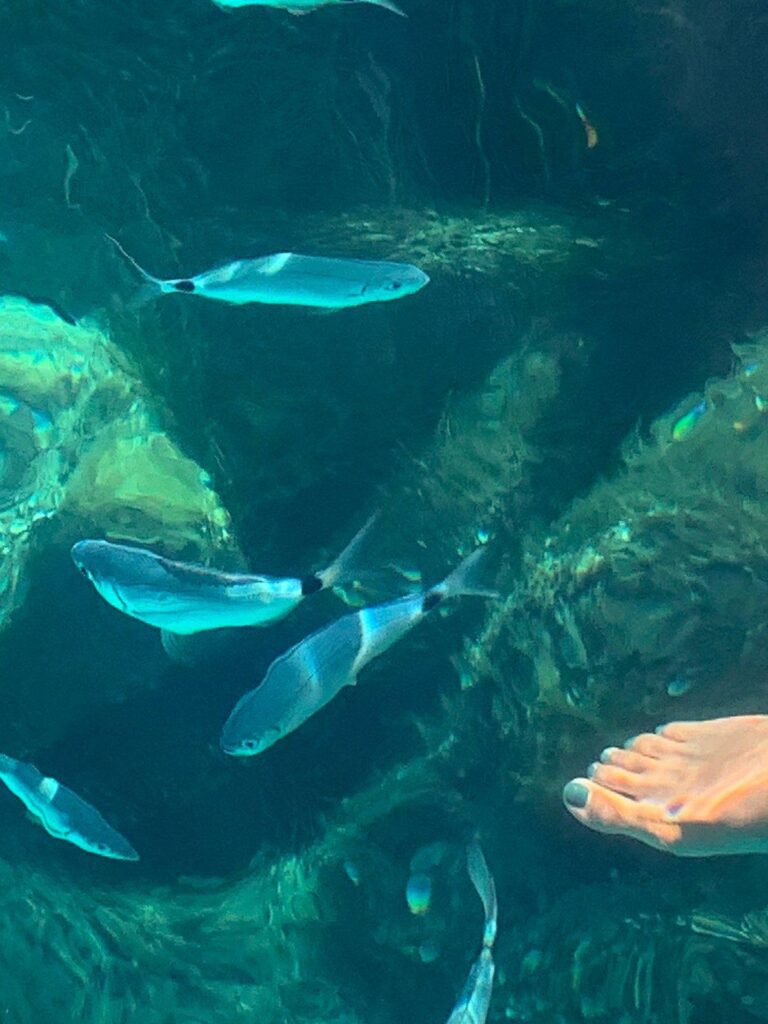
- Sea bream, salema, damselfish and rainbow wrasse: the most common fish, found at every depth.
Many of these species are described in our guide to the fish of the Gulf of Asinara, along with the rules on protected species.
How to choose a dive centre in Stintino
Stintino has dive centres that also operate in the protected area. Before booking, always ask:
- Is it authorised by the Park? Only authorised centres can take you to the protected area’s sites.
- Which sites does it suggest for your level? A good centre chooses based on your certification, recent experience and the day’s sea.
- How many divers per guide? Smaller groups mean more attention and more safety.
- What’s included? Equipment, tanks, boat transfer and insurance.
- What courses does it run? If you want to get certified, ask which training agency it uses and how long the course takes.
In high season places on dive boats are limited, partly because of the Park’s caps: book ahead.
When to go
The diving season usually runs from spring to autumn. From July to September the water is warmest and a 5 mm wetsuit is common; in June and October it’s cooler but the sites are quieter.
More than the season, it’s the wind that decides. The mistral can whip up the sea within hours, especially on the island’s western side, so dive centres pick the site day by day and outings sometimes get moved. Leave a spare day in your plans if you can.
Not certified: discovery dives and snorkelling
If you’ve never dived, ask a dive centre for a discovery dive (a “battesimo del mare”): a first try with an instructor, at shallow depth, after a short briefing. It’s the right way to find out whether you enjoy it before signing up for a course.
Alternatively there’s snorkelling, which needs no certification and already offers a lot at Asinara. You’ll find where to go and how to read the wind in our guide to snorkelling in Stintino and Asinara.
Safety and respect for the environment
- Certification and logbook: bring both; if it’s been a while since your last dive, ask for a refresher.
- Briefing: always listen, as every site has different currents and depths.
- Buoyancy: good buoyancy protects you and the seabed. Don’t rest on the Posidonia or touch the walls.
- No souvenirs: nothing is taken, and some species, such as the noble pen shell and the ribbed Mediterranean limpet, are protected.
- After diving: avoid flying within 24 hours and follow your training agency’s guidelines.
Davide’s tip
“If you’re in Stintino for several days, do your dives at the start of your holiday. If the mistral cancels an outing, you’ll still have time to make it up.”
After diving: the sea from a fishing boat
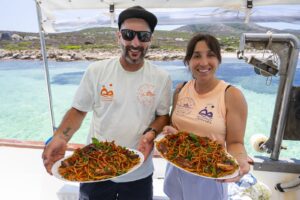
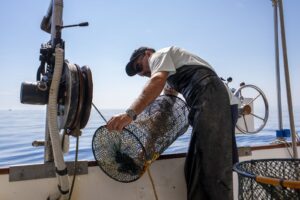
People who love the underwater world are usually curious about how fishermen work too. With us, aboard the fishing boat Alex, you’ll haul the pots and see octopus, crabs and cuttlefish up close, then swim in the Park’s coves and have lunch with the catch of the day. If you’re not sure what that involves, read what fishing tourism is; to plan your visit to the island, start with our guide on how to visit Asinara.

Diving in Stintino: FAQ
Can you dive independently at Asinara?
In the Marine Protected Area, scuba dives are run as guided visits by Park-authorised dive centres, at the marked sites. The rules are updated every year, so check them on the Park’s website.
How many dive sites are there at Asinara?
The Park’s 2024 regulations listed 26 sites for guided dives and snorkelling, each marked by a red buoy with a diver-down flag.
What will I see on a dive?
Granite walls and boulders, Posidonia meadows, dusky groupers, moray and conger eels, octopus, spiny lobsters and plenty of reef fish.
Do I need to be certified?
For normal dives, yes. Without certification you can ask a dive centre for a discovery dive with an instructor, or go snorkelling.
When is the best time?
From spring to autumn, with the warmest water from July to September. The day’s wind matters more than the season.
Want to see Asinara’s sea from the surface too? Come aboard the fishing boat Alex with Davide and Silvia: pot fishing, swims in the Park’s coves and lunch with the catch of the day → book your day.