Updated November 2026
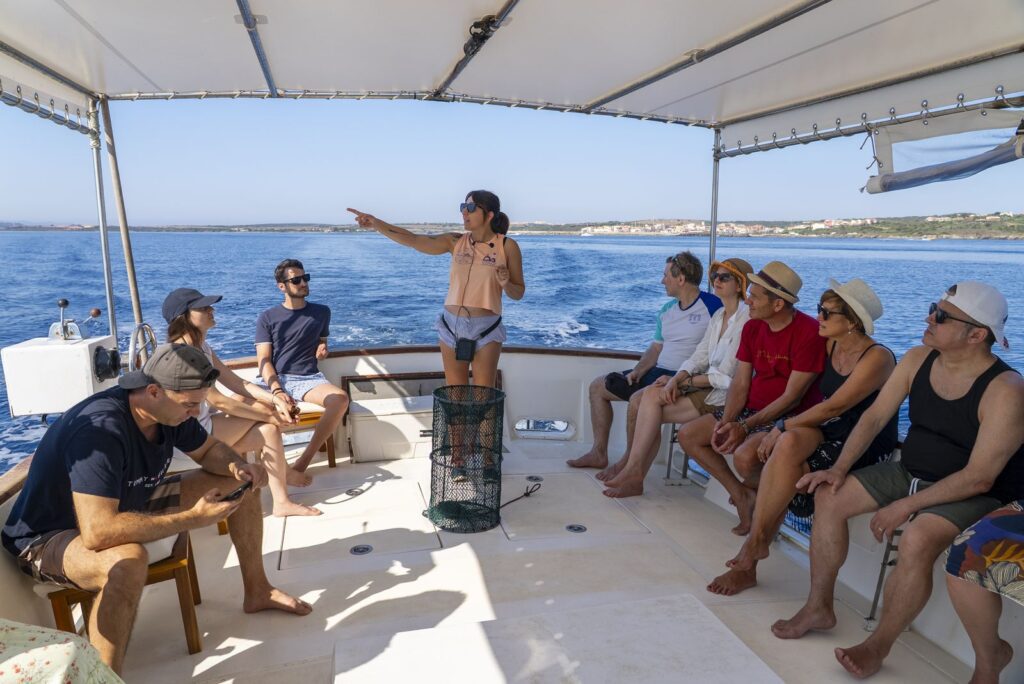
Fishing tourism (pescaturismo in Italian) is when a professional fisherman takes people who aren’t part of the crew on board their working fishing boat, so they can experience a real day of work at sea. It isn’t a show put on for tourists: the nets and pots are the ones we use every day, the fish is whatever the sea decides to give us, and lunch is cooked with what we’ve just hauled in.
We do it every day from Stintino, on board the fishing boat Alex, in the waters of Asinara National Park. In this guide we explain what Italian law says, how fishing tourism differs from a boat trip or sport fishing, what a typical day looks like and how to recognise an authentic experience. By the end you’ll know whether it’s for you, and what to expect when you step aboard.
At a glance
- Fishing tourism can only be run by a professional fishing business, on a licensed fishing boat.
- Guests watch and take part in real fishing: for us, that means hauling the pots.
- The day usually includes lunch on board with the catch of the day, swimming stops and, in our case, a stop ashore on Asinara.
- No experience needed: just a love of the sea and curiosity about how a fisherman works.

What is fishing tourism, in simple terms?
Picture stepping onto a fishing boat in the morning while the crew gets the gear ready. We sail out to where we dropped the pots the evening before, haul them up one by one and find out what’s inside: octopus, crabs, cuttlefish, fish for soup. You look, touch and learn to recognise the species. Undersized fish go back into the sea. Then the catch heads to the galley and becomes lunch.
That’s the heart of fishing tourism: a meeting between people who live from the sea and people who want to know it up close. For us fishermen it’s also a way to share an ancient trade and to supplement our income without having to fish more. For those on board, it’s something no tourist excursion can replicate, because nothing is staged.
What Italian law says about fishing tourism
The official definition
Legislative Decree no. 4 of 9 January 2012 (art. 2, para. 2) defines fishing tourism as “taking people who are not part of the crew on board fishing vessels for tourist and recreational purposes”. It’s an activity connected to professional fishing: only a fishing business can run it, and it must not outweigh the fishing itself.
The operating rules come from Ministerial Decree no. 293 of 1999, which regulates fishing tourism, plus regional rules. When you book, three things matter most:
- Licence. The boat must be a fishing vessel also licensed for fishing tourism, with the safety equipment required for carrying guests.
- Number of people. The fisherman doesn’t choose the maximum number of guests: the maritime authority sets it based on the boat’s stability. On the fishing boat Alex the maximum is 12 guests plus crew.
- Fishing area. Inside a protected area such as Asinara National Park, the Park’s rules also apply: where you can fish, with which gear and where you can stop.
In short: if a “fishing trip” takes place on a pleasure boat and nobody on board is a professional fisherman, it isn’t fishing tourism, whatever the advert calls it.
Fishing tourism, ittiturismo, sport fishing and boat trips: the differences
These are four different experiences that often get mixed up online. This table helps you understand what you’re booking.
| Fishing tourism | Ittiturismo | Sport fishing | Boat trip | |
|---|---|---|---|---|
| Who runs it | Professional fishing business | Professional fishing business | Charter or private owner | Tour operator |
| Where | On a working fishing boat | Usually ashore: rooms, restaurant, workshops | Equipped pleasure boat | Ferry, RIB, sailing boat |
| What you do | Watch and take part in professional fishing | Eat, stay or learn at a fishermen’s place | You fish, with rod and line | Sail, swim, visit coves |
| The catch | Cooked and eaten on board | Served at the table | Under recreational fishing rules | No fishing |
| Ideal for | Understanding the sea and eating just-caught fish | A fishermen-style stay or meal | Keen anglers | Just sea and relaxation |
Fishing tourism is the only one of the four where you see real fishermen at work on their own boat. Many trips, like ours, combine fishing with swims in the coves and visits: they take the best of a boat trip, but with real fishing at their heart.
What a fishing tourism day looks like: our day in Stintino
Every fishing tourism trip has its own rhythm, shaped by the area and the fishing technique. This is our typical day in the Gulf of Asinara.
| Time | What happens |
|---|---|
| 9:10 | Meet at Porto Mannu, Stintino: welcome and safety briefing |
| 9:30 | Departure and sailing to the fishing grounds |
| Morning | Hauling the pots: we bring them up, empty them and look at the catch |
| Late morning | Swimming stop in a cove while lunch is prepared in the galley |
| Lunch | First and main course with the catch of the day, local wine, coffee and a digestif |
| Afternoon | Stop ashore at Cala Reale, more coves and time to relax |
| About 17:30 | Back in port, after dropping the pots again for the next day |
Times and stops change with the sea and the wind: the skipper always decides, because safety comes first.
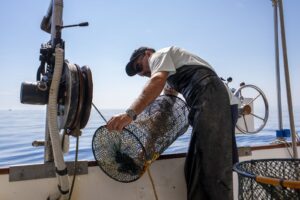
Hauling the pots
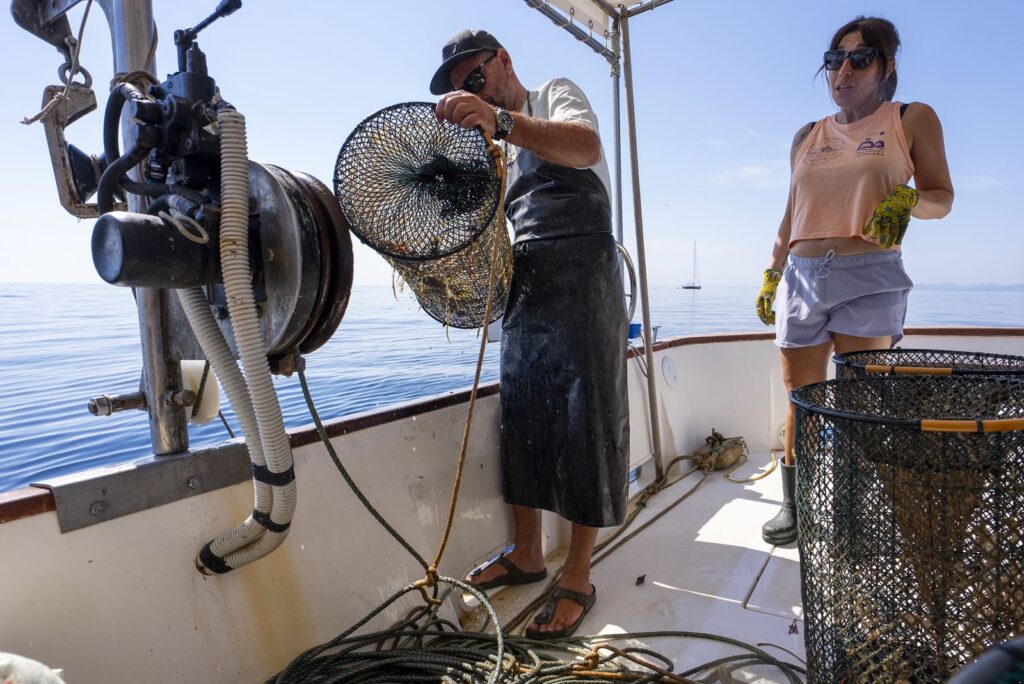
A pot is a basket-shaped trap: fish swim in, drawn by the bait, and can’t find their way out. It’s one of the most selective small-scale fishing techniques, because the catch comes aboard alive and whole. That means we can immediately put back anything undersized or that shouldn’t be kept.
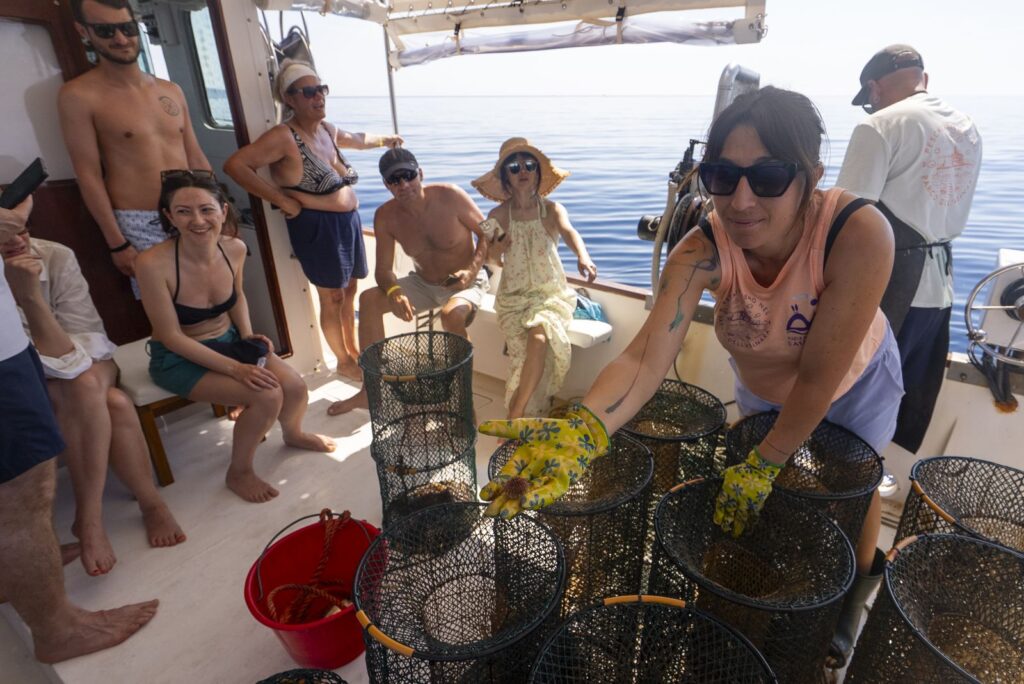
It’s the moment our guests remember most: anyone who wants can help empty the pots, and Davide explains each species as it comes out. Nobody knows what will be inside, and that’s exactly why no two days are the same.
Davide’s tip
“When we open the pots, don’t rush to take photos. First watch how an octopus moves when it’s just out of the water, how it changes colour. It’s something you’ll never see at the fishmonger’s.”
Lunch with the catch of the day
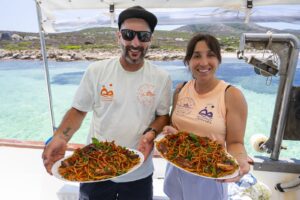
While guests are in the water, Silvia turns the catch into lunch in the galley. The menu depends on what came out of the pots. Among the dishes we cook most often are spaghetti with crab sauce, Stintino-style octopus with potatoes and our own marinated anchovies. We finish with local sweets, coffee and myrtle liqueur.
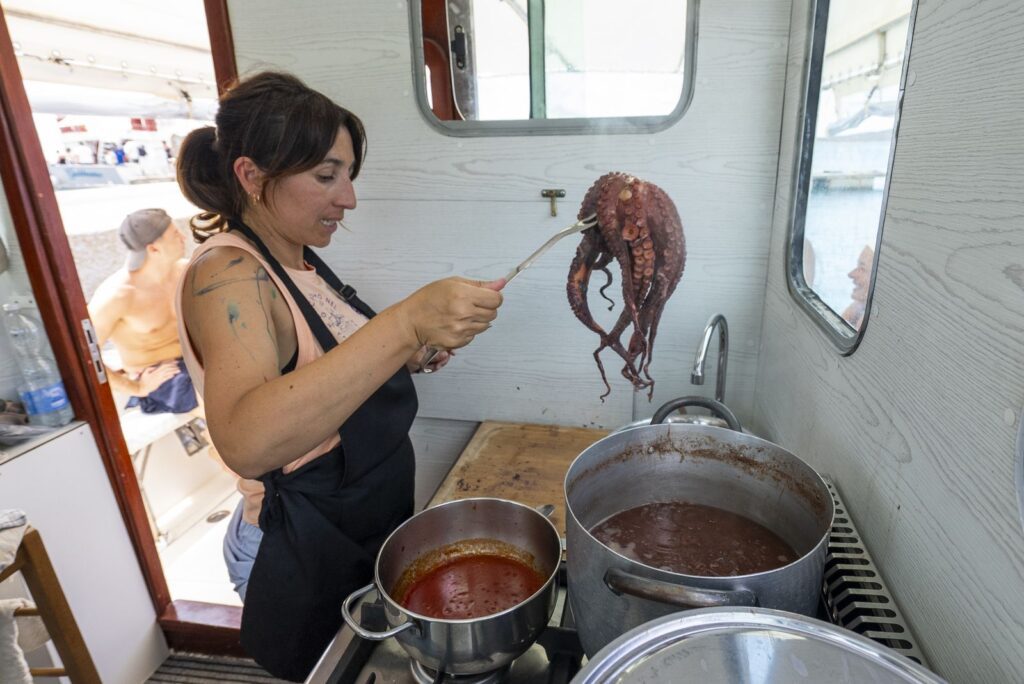
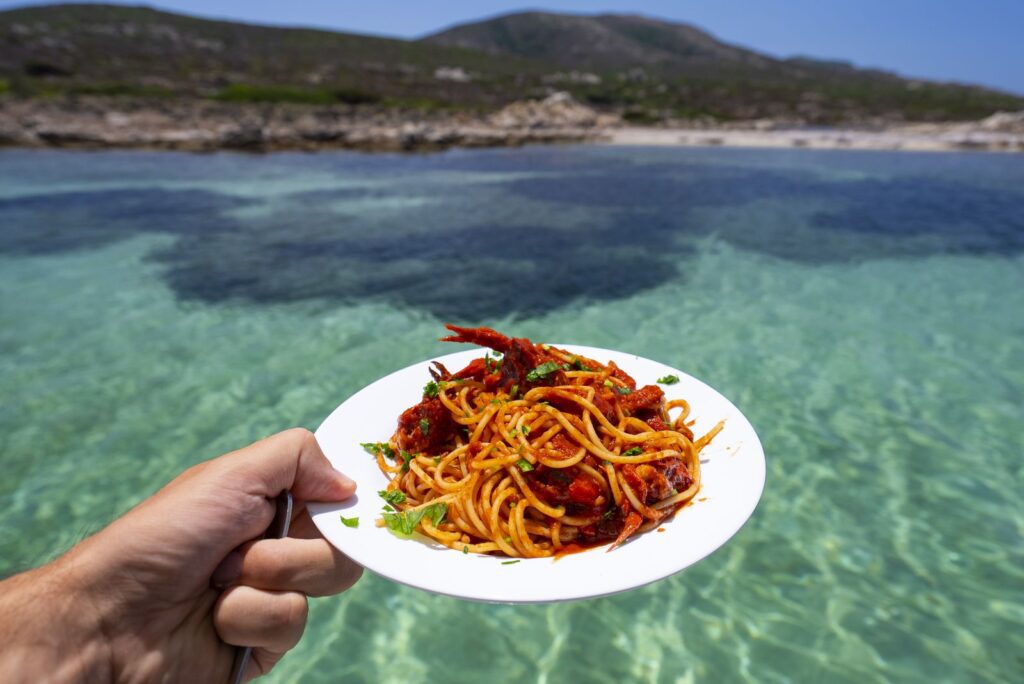
If you have food intolerances, allergies or coeliac disease, just tell us when you book and we’ll prepare a suitable menu.
Swimming and a stop ashore on Asinara

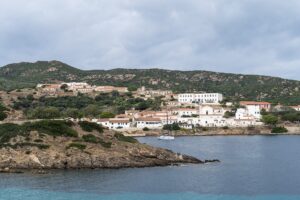
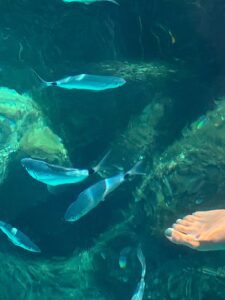
Since we work inside the National Park, our trip includes stops in some of the island’s most beautiful coves, such as Cala del Granito, Cala degli Inglesi and Porto del Bianco, and a stop ashore at Cala Reale and the Royal Palace. There you can visit the C.R.A.M.A., the sea turtle rescue centre, and with a bit of luck meet the white donkey, Asinara’s living symbol.
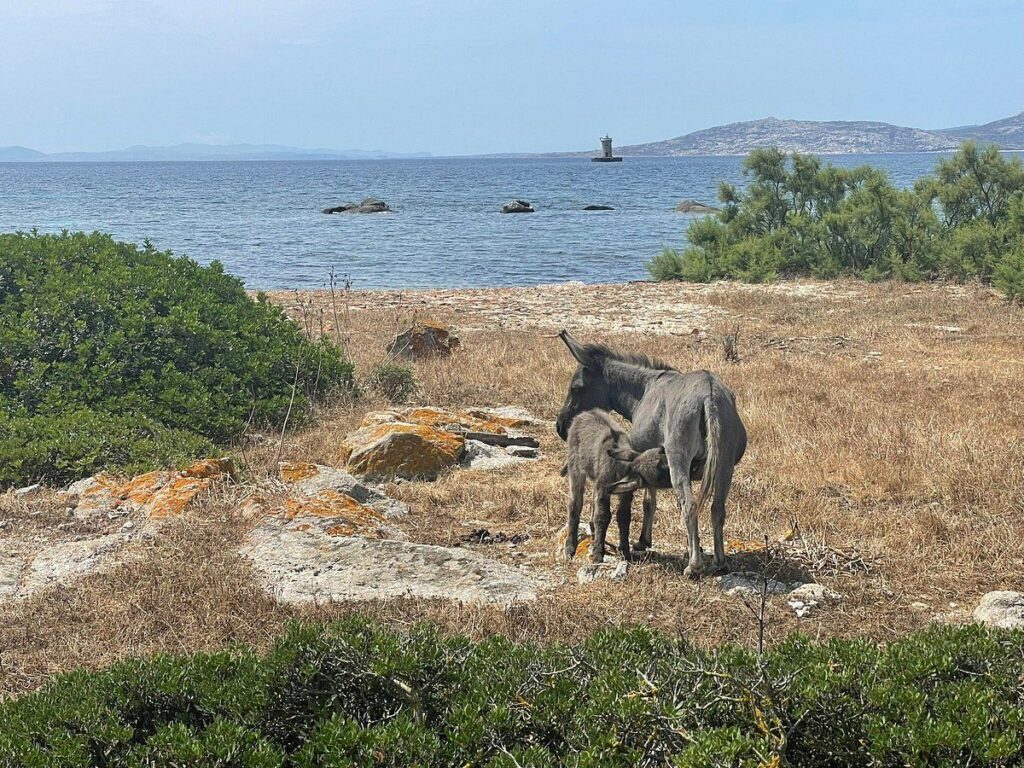
If you’d like to get to know the island more deeply, you can add a guided tour of Asinara with the Park’s licensed guides.
What do you catch? It depends on the sea, and that’s how it should be
One question we hear a lot is: “What will we catch today?” The honest answer is that we don’t know. The catch changes with the season, the water temperature and the wind of the previous days. With pots, in our waters, the most common species are:
- octopus, the star of many days;
- crabs, which become the spaghetti sauce;
- cuttlefish, especially at certain times of year;
- soup fish, such as scorpionfish and other bottom species.
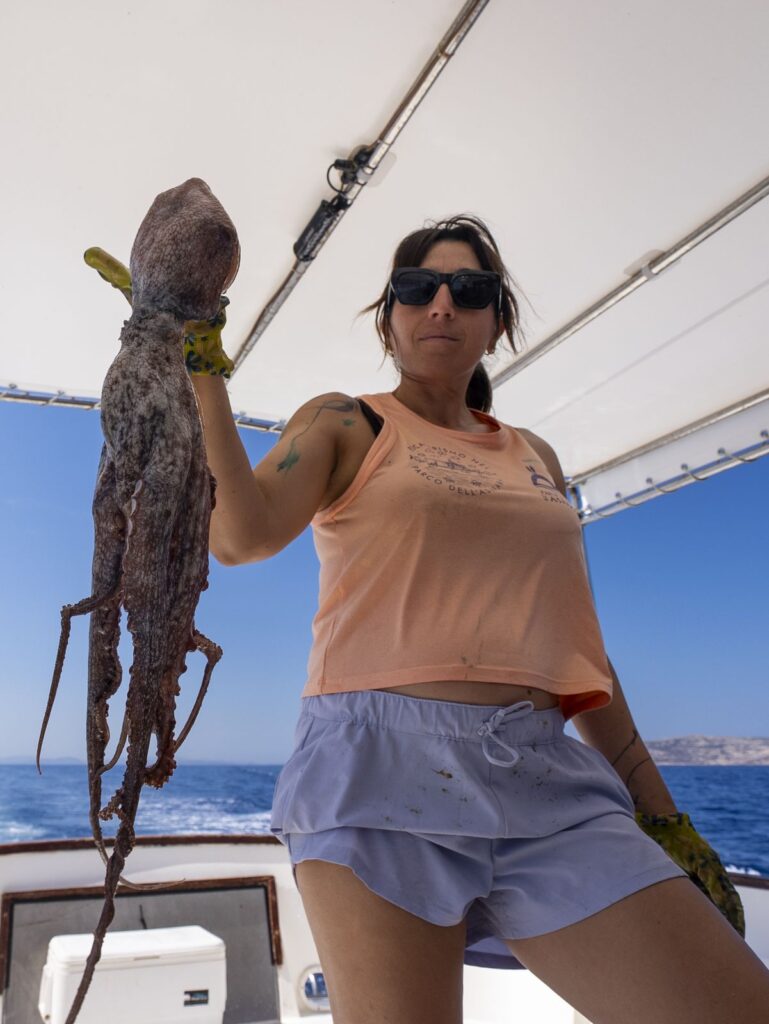
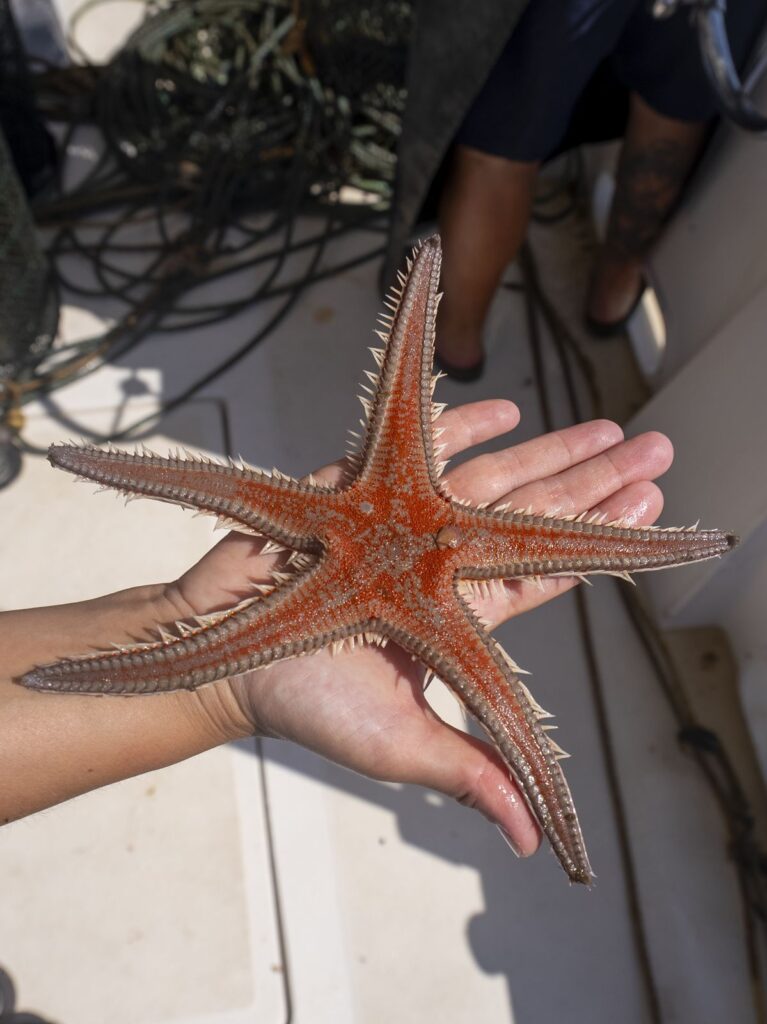
What doesn’t change is respect for the rules: fish under the minimum size go straight back into the sea, in front of our guests. Lots of people notice it, and it matters to us, because tomorrow’s sea depends on how we treat it today. To find out more, read how pot fishing works and which fish live in the Gulf of Asinara.
Why fishing tourism is a sustainable way to experience the sea
Fishing tourism was created partly for this reason: to let small-scale fishermen earn from their knowledge without increasing fishing effort. A day with guests on board is worth more for the stories we tell than for the kilos of fish we bring ashore.
- Selective fishing: with pots the catch arrives alive and anything that shouldn’t be kept can be released.
- Sea culture: techniques, words and traditions that would otherwise be lost are handed down.
- Small groups: a maximum of 12 guests has minimal impact on the coves and the environment.
- The shortest supply chain: fish goes from sea to plate in a few hours, with no transport or packaging.
Who is fishing tourism for (and who isn’t it for)?
We’ll tell you straight, so you can choose well.
It’s for you if:
- you want to see how a fisherman really works and learn to recognise what you eat;
- you’re travelling as a family: kids are the most excited when the pots open;
- you want a day at sea with few people, away from crowded boats;
- you love fresh fish and simple home cooking.
It might not be for you if:
- your goal is to land a big fish on a rod: in that case look for a sport fishing charter;
- you want music, partying and entertainment on board;
- you suffer badly from seasickness: a whole day on a boat can be tough. Talk to your doctor before you go.
How much does fishing tourism cost?
The price of a fishing tourism trip depends on its length, what’s included and the season: a few hours without a meal isn’t comparable to a full day with lunch on board and stops in the coves. When comparing offers, always look at what’s included, not just the final figure.
Our prices also vary by time of year, with reductions for children. The day includes sailing from 9:30 to about 17:30, the fishing demonstration, lunch with a first and main course, local wine, water, coffee and a digestif, buoyancy aids for weaker swimmers and swimming from the boat.
To find out the price for your date, write to us from the booking page or contact us on WhatsApp: we’ll get back to you as soon as possible with availability and price.
What to bring for a fishing tourism day
- Sunscreen, a hat and sunglasses
- Swimsuit, towel and, if you have them, mask, snorkel and fins
- A sweatshirt or windbreaker: out at sea you feel the wind even in summer
- Comfortable sandals, also handy for the stop ashore
- Any personal medication: we have a first-aid kit on board, but not specific medicines
- Phone or camera, ideally in a waterproof case
How to choose a good fishing tourism trip: 6 questions to ask before booking
- Is the boat a fishing vessel licensed for fishing tourism? If it’s a pleasure boat, it’s an excursion, not fishing tourism.
- Who’s on board? The skipper should be a professional fisherman who knows the area.
- How many guests at most? Fewer people means more space, more explanations and more time for questions.
- Is the fishing real? Ask which technique is used and whether lunch is made with the day’s catch.
- What’s included in the price? Lunch, drinks, stops, snorkelling gear.
- What do the reviews say? Look for recent, detailed reviews that describe the day.
If you’d like to know how our business started, read our fishing tourism story in Stintino or get to know us on our about us page.

Fishing tourism: FAQ
Do you need fishing experience to take part?
No. Davide explains on board how the pots work, and anyone who wants can help haul them. Everyone else can simply watch and enjoy the sea.
Can children come?
Yes, children are welcome, always with an adult. For any special needs, let us know when you book.
What happens if the sea is rough?
Safety comes first. If weather and sea conditions don’t allow it, the trip can be postponed or cancelled: we’ll contact you to agree an alternative.
Is lunch suitable for coeliacs and people with intolerances?
Yes, we prepare meals for coeliacs and people with intolerances. Just let us know when you book.
How long does a fishing tourism trip last?
It depends on the operator. Ours is a full day: we leave at 9:30 from Porto Mannu in Stintino and get back around 17:30.
How do you book?
Through the website, by phone, on WhatsApp or by email. In high season it’s best to book ahead, as there are a maximum of 12 places a day.
Want to try fishing tourism in Asinara National Park? Come aboard the fishing boat Alex with Davide and Silvia: real fishing, dreamy coves and lunch with the catch of the day → book your day.